WA Regulations For Business CCTV: What Perth Businesses Need To Know
March 2, 2026
Choosing Inner Range Integriti vs Tecom Challenger usually comes down to scale, integration depth, and how you want to run your security operations day to day. Both are Australian-designed, enterprise-grade security systems used across commercial and industrial environments. The difference is the architecture focus. Inner Range Integriti is built for modern IP networks, deep integration, and growth across complex sites. Tecom Challenger is a robust, reliable platform with strong local support and a reputation for flexible, customised deployments.
At Castle Security, we design and support access control systems tailored to real use cases like warehouses, schools, government sites, and multi-site businesses. This guide helps you shortlist the right system based on what actually matters in deployment, not brochure features.
If you want a fast decision rule, use this:
Both platforms can deliver enhanced security for business premises. The right choice depends on your doors, alarm zones, integration scope, and long-term expansion plans.
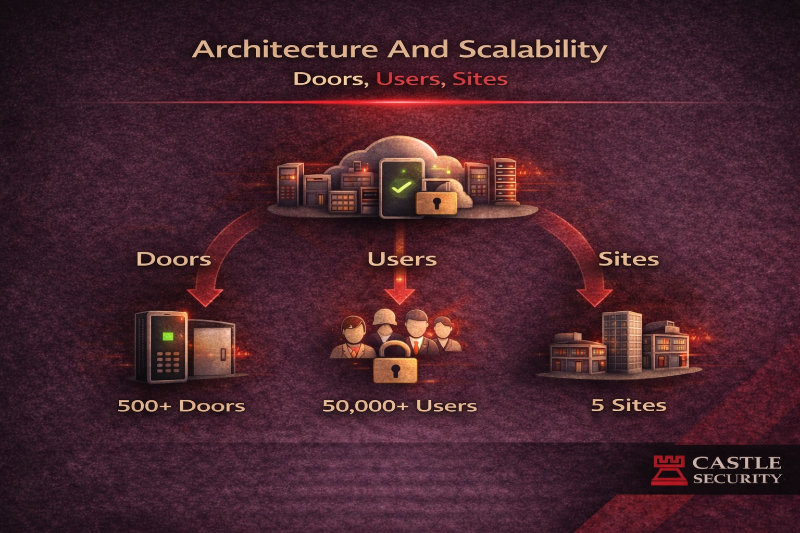
The underlying system architecture determines how far you can expand without re-platforming.
Inner Range Integriti is designed for large-scale installations and is scalable from a single building to multi-site facilities and campuses. It can manage thousands of users, thousands of doors, and thousands of alarm zones when designed correctly. It also supports multiple Integriti controllers and distributed deployments that suit complex environments.
Tecom Challenger is widely respected for robustness and for handling complex security requirements, but its most cost-effective fit is often a single site or smaller portfolio where the architecture remains simpler and easier to standardise.
If you are planning more sites, more access points, and more integrations over time, scalability should be a primary decision factor.
Many businesses want one platform to manage access control, intrusion detection, and automation workflows.
Integriti is often selected when you want seamless access control plus high-level integrations that bring CCTV systems, intercoms, lifts, lighting, and HVAC into one operational view. This is where Integriti unlocks a broader “security management” model rather than separate systems.
Challenger is strong for business alarm systems and intruder alarms, and it can support access control solutions alongside alarms. Where it can differ is the breadth of native integrations and how unified the operator experience feels when you start adding more third-party technologies.
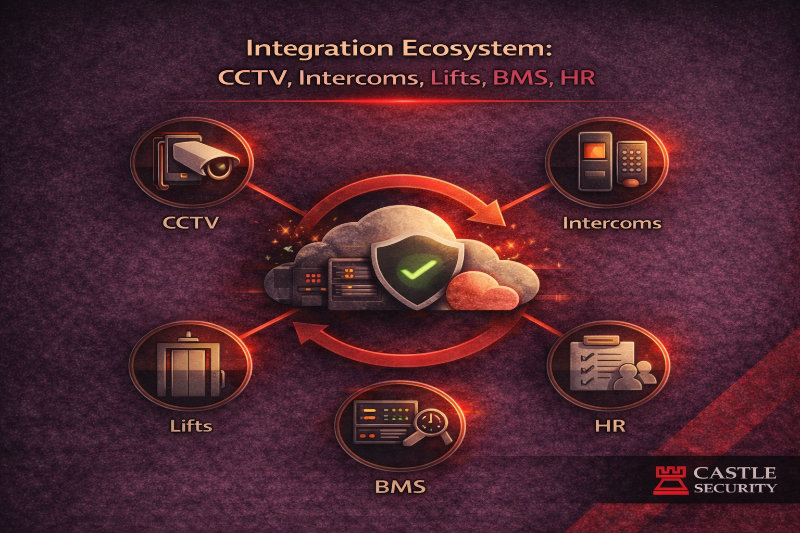
Integration capabilities are where decision-makers feel the biggest difference after go live.
Integriti is designed for modern IP networks and offers superior third-party integration capabilities. It supports a large catalogue of native integrations and is known for native high-level integration with CCTV, lifts, lighting, HVAC, biometrics, and intercoms. For many customers, the value is operational: events, alarms, and doors can be managed through a single interface with consistent access logs and workflows.
Tecom Challenger can integrate with other security systems, but the integration options are typically narrower and often more project-specific. If your shortlist includes heavy integration with building management systems and enterprise platforms, validate your integration scope early.
A practical way to compare is to list the exact systems you need to integrate, for example CCTV integration starting point, intercoms, elevators, and HR onboarding, then confirm whether the integration is native, supported, and maintainable.
Real deployments need to work when the network is imperfect.
A good design for either platform should support local operation at the controller level so doors continue to operate during WAN outages. What changes is how multi-site reporting and central monitoring behave when sites go offline.
Integriti’s distributed architecture is commonly used to support resilience across complex environments, with local processing at sites and centralised visibility when comms are healthy.
Challenger deployments can be very resilient when designed with the right topology, comms paths, and monitoring workflows, especially in single-site or simpler multi-site environments.
If you operate remote facilities, ask your installer to explain what happens at doors, alarms, and monitoring screens during a WAN outage, not just “it has redundancy”.
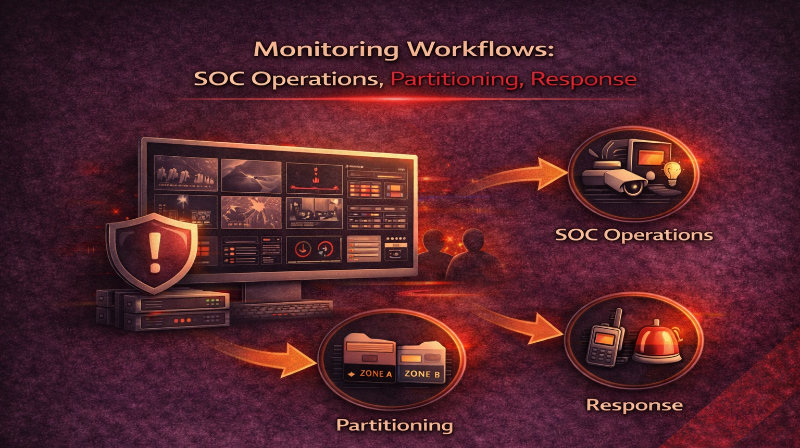
Operator workflow is a hidden cost in security systems.
Integriti is known for its intuitive, modern desktop and mobile application experience used for monitoring and real-time reporting. The operator workflow often feels more modern, especially when you manage many doors, many alarms, and multiple sites from one screen. That matters for security personnel and SOC operations where speed and clarity reduce mistakes.
Challenger is often chosen where teams want straightforward monitoring and a familiar alarm operational model. It can be very effective, particularly where partitioning, response routines, and local support are priorities.
User-friendliness is not cosmetic. It affects incident response speed, staff training time, and how reliably teams follow process.
Modern access control projects increasingly mandate secure reader standards and credential strategies.
For readers, many organisations now standardise on OSDP to support supervised communications and richer device management. For credentials, DESFire and mobile credentials are common for improved security and reduced cloning risk.
Integriti deployments commonly align well with modern credential strategies, including mobile-first approaches and strong integration pathways. Challenger deployments can also support modern access control, but the best approach is to validate your required reader standards and credential roadmap with the exact hardware stack you plan to deploy.
If you need a deeper dive, connect this comparison to your internal standards guides for OSDP Vs Wiegand For Access Control and DESFire Vs Legacy Cards so your technology decisions remain consistent across sites.
Long-term cost is a combination of licensing, expansion costs, and operational overhead.
Integriti is often a higher investment when you want advanced functionality, broader integration, and enterprise-scale capability. That can be justified when it replaces multiple systems and reduces operational costs through unified security management.
Challenger is often positioned as a cost effective approach for many commercial deployments, especially where requirements are clear and integration scope is contained.
Evaluate budget in terms of total lifecycle cost: software, comms, expansions, on-site support visits, and the cost of operating fragmented systems.
Hardware topology affects commissioning complexity, future expansions, and how easily you can reuse existing infrastructure.
Integriti architectures often use multiple controllers and networked modules that suit IP-centric environments and larger estates. Challenger architectures are commonly deployed with a simpler topology that can be easier to standardise for smaller footprints.
For both platforms, the key is designing controller placement, comms, and expansion paths so you do not paint yourself into a corner when you add doors, add sites, or add integrations.
Most projects are migrations, not greenfield installs.
In many cases you can reuse:
The practical migration question is whether your existing readers and cabling can support your future standard, especially if you are moving to OSDP and secure credentials. A staged upgrade is often the best path, replacing readers and controllers in priority areas first while keeping the site operational.
Security posture is now part of access control procurement.
Integriti is designed to comply with high-level security standards and supports strong encryption approaches, including AES-grade encryption, along with audit logging that supports enterprise oversight. It is often selected where organisations want an IT-centric system that aligns with security policies and governance.
Challenger can be deployed securely as well, but your outcome depends on deployment quality: firmware management, credential strategy, network segmentation, and access rule governance.
In both cases, the installer matters. A secure platform deployed poorly becomes a weak platform.
Support after installation is what makes a system reliable.
Tecom Challenger has strong local support in the Australian market with a wide network of trained installers. That can be a deciding factor for organisations that want flexibility in service providers.
Integriti support quality is excellent when you work with an experienced partner who understands commissioning, integrations, and multi-site design. The platform can be more capable, but it can also be more complex, which makes partner experience more important.
Castle Security supports both environments and can advise which path aligns to your internal capabilities and expected service model.
Every platform has tradeoffs. The goal is to choose the one whose tradeoffs you can live with.
Common Integriti pain points include:
Common Challenger pain points include:
A structured commissioning plan and clear operator training reduce these risks significantly.
Use case alignment is the cleanest way to decide.
It is crucial to assess your organisation’s unique needs before choosing a security system.
Integriti is often the stronger choice for enterprise multi-site deployments where you need scalability, deep integration, and modern monitoring workflows. Challenger can work well in multi-site environments, especially when requirements are consistent and service coverage is the priority.
Integriti is commonly chosen for unified security management with broader integration capabilities across access control, intrusion, and automation. Challenger is strong for business alarm systems and intrusion detection, with access control capabilities that fit many commercial sites.
Often yes. Reuse depends on the condition of cabling and whether you are moving to modern reader standards and secure credentials. A staged upgrade plan is usually the safest approach.
Both platforms can support modern credential strategies depending on the hardware stack and configuration. Validate reader standards, credential formats, and roadmap requirements at the design stage.
Challenger is often cost effective for simpler single-site deployments. Integriti can be more cost-effective over time for larger environments because it consolidates integrations and scales without re-platforming.
Inner Range Integriti vs Tecom Challenger is a choice between two proven security systems, but they suit different operating models. If you need advanced access control systems with deep integration capabilities, modern operator tools, and growth across multi-site environments, Inner Range Integriti is often the better fit. If you need a reliable, cost effective system for a single business premises or a contained industrial site with strong local support, Tecom Challenger is often the practical choice.
If you want a clear recommendation, Castle Security can review your doors, alarm zones, integration needs, and migration constraints, then help you choose the best platform for your site and budget. Contact Castle Security to book a comparison consult and get a deployment plan that fits your business.