WA Regulations For Business CCTV: What Perth Businesses Need To Know
March 2, 2026
Most access control projects succeed or fail on door hardware, not software. You can have a modern access control platform and still end up with doors that do not latch, false alarms, unsafe egress, or constant callouts if the door hardware access control scope is wrong. The goal is simple: a door that is secure, compliant, durable, and predictable every day.
At Castle Security, we see the same pattern in Perth commercial sites: buyers scope “readers and controllers” but forget door furniture, power, fire and life safety, and how the door physically closes and latches. This guide explains what door hardware is in an access control system, how locks and strikes actually work, and the common misses that cause expensive rework.
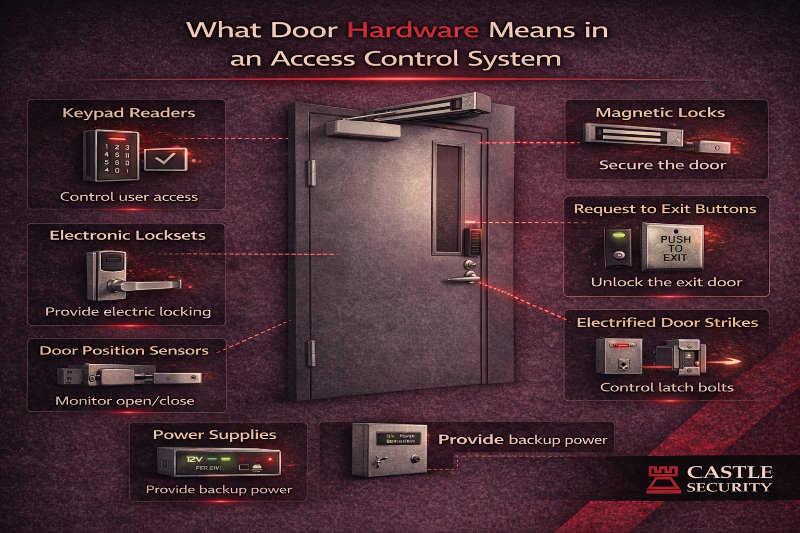
In access control systems, “door hardware” is everything that makes the door physically open, close, latch, lock, and exit safely. It is more than an electric lock. It includes:
Choosing the right door hardware is crucial for the success of a project because the hardware is what the user touches every day, and it is what keeps the perimeter secure when no one is watching.
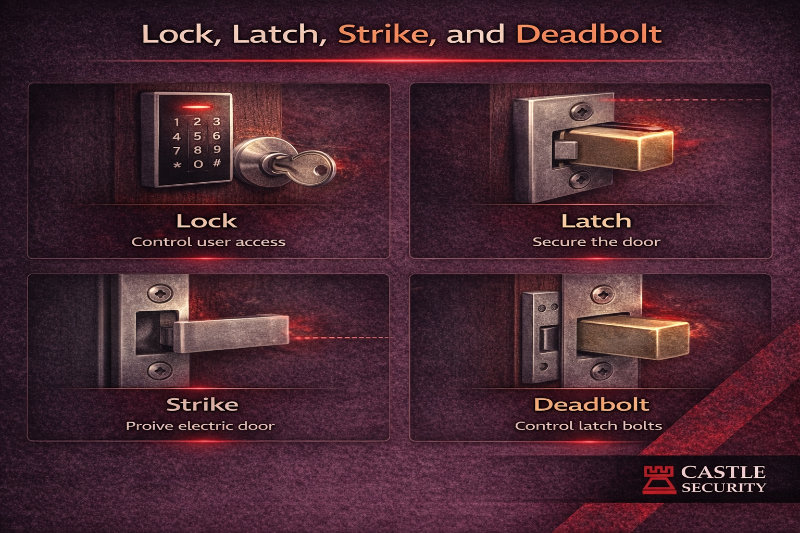
These terms get mixed up constantly, which causes scope errors.
Most access control solutions revolve around controlling the latch or controlling the lock function, not the door itself. That is why you need to know what the existing lockset is and how the door currently latches before you select electrified hardware.
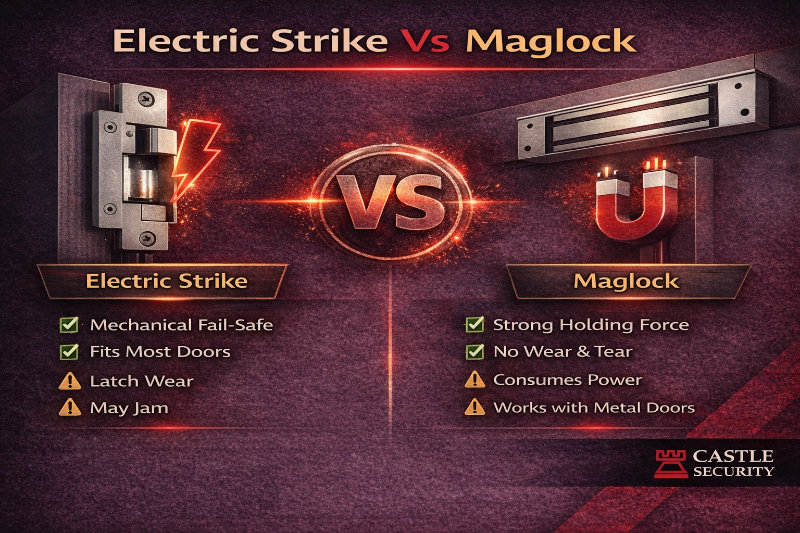
Electric strikes and maglocks both control entry, but they behave differently under power loss and different door types.
An electric strike replaces or modifies the strike in the door frame. When the system grants access, the strike releases the latch so the door can be pulled open. In many configurations, electric strikes remain locked without power, which is why they are often selected for perimeter security. Electric strikes are common on doors that already have a mechanical latch and door closer.
A magnetic lock mounts to the frame and door and uses electromagnetism to hold the door closed. Magnetic locks are typically fail-safe and require constant power to remain locked. When power is removed, the door releases. Maglocks can work well on certain doors, but they must be designed carefully for safe egress, correct mounting, and reliable release devices.
A simple practical rule: electric strikes are often better when you have a good latch and closer already and you want a clean mechanical feel. Maglocks are often used where latching is difficult or where glass door configurations push you toward magnetic solutions, but they demand more attention to egress and release hardware.
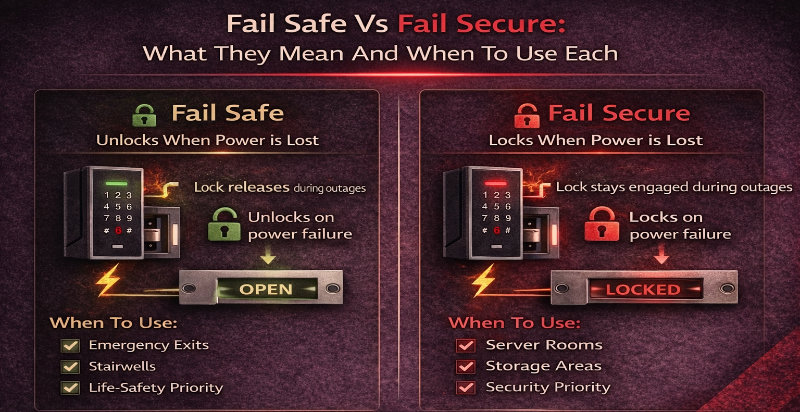
Fail-safe vs fail-secure is not a preference. It is a safety and risk decision.
Fail-Safe means the door unlocks during a power failure. Fail-safe locks unlock during power failures and are used for safety exits and areas where people must be able to leave during emergencies. Maglocks are typically fail-safe.
Fail-Secure means the door remains locked during a power failure. Fail-secure locks remain locked during power failures and are often used for perimeter security where maintaining building integrity is critical.
In real buildings, you often use a mix:
If you choose the wrong fail mode, you either create a safety risk or a security gap.
Access control hardware is only as good as its power and wiring. Door access wiring is where the hidden complexity lives.
Every electrified door needs:
Maglocks require constant power to remain locked, so power design matters more. Electric strikes can draw high current during release depending on type, so supply and cable sizing still matters.
This is also where “cheap scope” fails. If you do not budget for correct power supplies, distribution, and testing, the system becomes unreliable and creates ongoing callouts.
A request-to-exit (REX) device is a device that tells the system a person is leaving so the door can unlock or the alarm input can be bypassed. Without a REX device, doors can create nuisance alarms or block safe egress depending on the configuration.
Common REX options include:
REX is not just convenience. It is part of safe operation and it protects the integrity of access logs by distinguishing a valid exit from a forced door condition.
A door position switch (DPS) detects whether a door is open or closed. It is often a small reed switch in the frame and a magnet in the door, or a heavy-duty industrial contact for high-use doors.
DPS enables:
If you want reliable security reporting, DPS is usually worth installing on key entry points and sensitive areas.
A crash bar or panic hardware is designed for fast evacuation. It changes how you electrify and control the door.
Key points:
This is where security and life safety meet. You cannot treat a fire exit door like a standard internal office door.
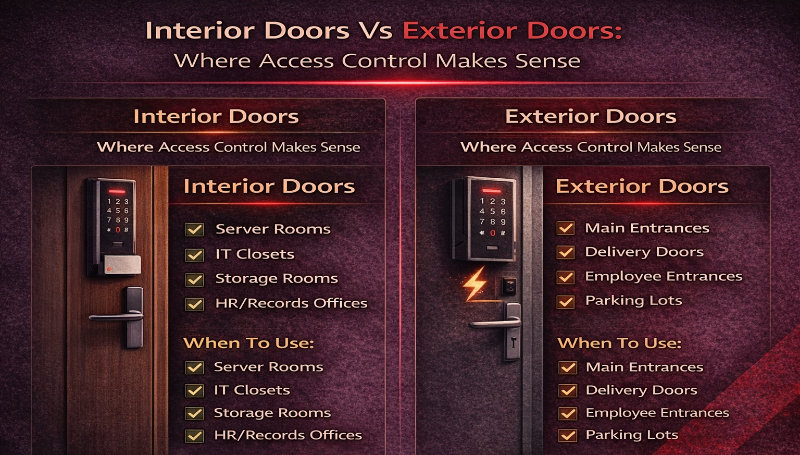
Not every door needs access control. The best systems use layered design.
Access control is usually essential on:
Interior doors can be valuable when you need to restrict entry by department, protect sensitive information, or reduce internal risk. The right design balances controlling access with operational flow so staff can work efficiently.
Access control manages who can enter. Door closers and hinges control how the door physically moves and closes.
Door closers control closing speed and latching reliability. They are critical in commercial environments because they:
Door hinges and pivots carry load and alignment. Misaligned hinges cause latch misalignment and “door not latching” issues, especially after electrified hardware is installed.
This is why architectural door hardware matters. If the door is not mechanically healthy, the best electronics will still fail.
Fire and life safety affects:
Specialised hardware ensures compliant and safe egress during emergencies while maintaining security. Fire door hardware is essential for fast evacuation and should be treated as a safety-critical scope item, not an add-on.
If your project includes fire-rated doors, the electrification method and hardware selection must be appropriate for that door’s certification and intended use.
Reader placement sounds simple until it causes user friction, damage, or unsafe behaviour.
A mullion reader is slim and designed to mount on door frames, mullions, or narrow surfaces. It is common on aluminium storefront doors and narrow entry points.
A wall reader is larger and often used where you want more capability, such as keypad, biometrics, or advanced user feedback mechanism features.
Placement matters because it affects:
A well-placed reader reduces tailgating and reduces frustration at busy doors.
This is the most common post-install complaint, and it is almost always a mechanical issue revealed by electrification.
Common causes include:
The fix is rarely “change the access control software.” The fix is to correct the door mechanics and hardware selection so the door closes and latches predictably every time.
Use these rules to avoid scope problems:
Choosing door hardware involves considering both style and functionality, but security and life safety must come first.
A Perth commercial site upgraded to access control but experienced repeated issues with doors not latching and frequent forced-door alarms. The original scope focused on readers and software but under-scoped door closers, hinge alignment, and the strike installation.
Castle Security assessed the door hardware and found mechanical misalignment and insufficient closing force. We corrected hinge alignment, adjusted and upgraded door closers where required, aligned the strike properly, and added DPS and appropriate REX devices to improve event accuracy. The result was fewer false alarms, better perimeter integrity, and a system that worked predictably under daily use.
Door hardware includes locks, latches, strikes, hinges, door closers, door seals, electrified locking devices, exit devices, and sensors that make the door secure and operable with access control.
An electric strike releases a latch bolt so the door can open when access is granted and often remains locked without power. A maglock uses an electromagnet to hold the door shut and is typically fail-safe, requiring constant power to stay locked.
Fail-safe locks unlock during power failure and are used where safe egress is the priority. Fail-secure locks remain locked during power failure and are used where perimeter security is the priority.
Yes for most controlled doors. A REX device allows safe exit and prevents nuisance alarms by signalling valid exits to the access control system.
The most common causes are poor door closer adjustment, hinge sag, latch and strike misalignment, increased resistance from door seals, or incorrect electrified hardware alignment.
No. Access control manages entry permissions. Door closers and hinges control door movement and latching, and they are essential for safety and reliable security.
Door hardware is the foundation of a reliable access control system. When locks, strikes, door closers, hinges, power, and egress requirements are designed properly, access control enhances security, simplifies audits, and reduces rekeying costs. When door hardware is treated as an afterthought, projects end up with unsafe exits, open doors, false alarms, and repeat callouts.
If you want a clean scope that avoids expensive rework, Castle Security can assess your doors, hardware condition, power design, and egress requirements, then produce a hardware and access control plan that suits your building and budget. Contact Castle Security to book a door hardware and access control design review and get a practical upgrade roadmap for your site.