DESFire Vs Legacy Cards: How To Upgrade Prox And MIFARE Classic Without Disrupting Access
February 26, 2026

WA regulations for business CCTV are mostly about using surveillance devices lawfully, respecting privacy in private spaces, and being transparent with staff and the public. In most cases, it is legal to install CCTV at a business in Western Australia, but the rules change depending on where the cameras point, whether you record sound, and whether people have a reasonable expectation of privacy.
This guide is written for business owners, facility managers, and employers who want camera surveillance for safety, theft prevention, and break ins, while staying on the right side of local laws and privacy laws. It is general information, not legal advice.
Most CCTV compliance questions fall into two buckets:
In practice, WA businesses should treat CCTV as part of their security infrastructure and also a privacy risk area that needs basic governance.

Yes, in general, businesses can install security cameras in public spaces of their premises such as entrances, retail floors, car parks, loading bays, and office reception, provided the setup is not used in an unlawful way and does not intrude into private activities.
Where businesses get into trouble is when cameras capture private spaces, are used like spy cameras, or when CCTV includes audio recording without proper consent.
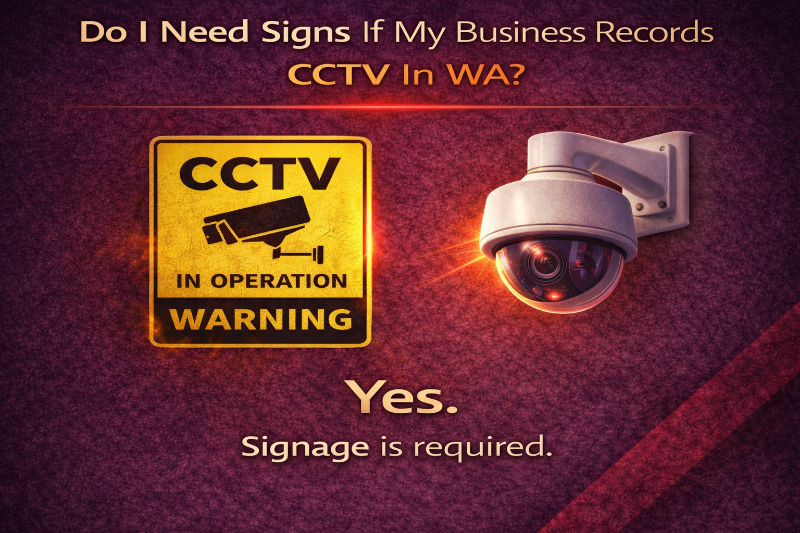
Visible signage is not just a “nice to have”. It is one of the easiest ways to support legal compliance and reduce disputes.
Clear signs help because they:
A practical baseline is a sign at each main entry and at key internal access points. The wording should be simple: “CCTV In Operation” and the purpose such as safety, security, theft prevention, or monitoring access.
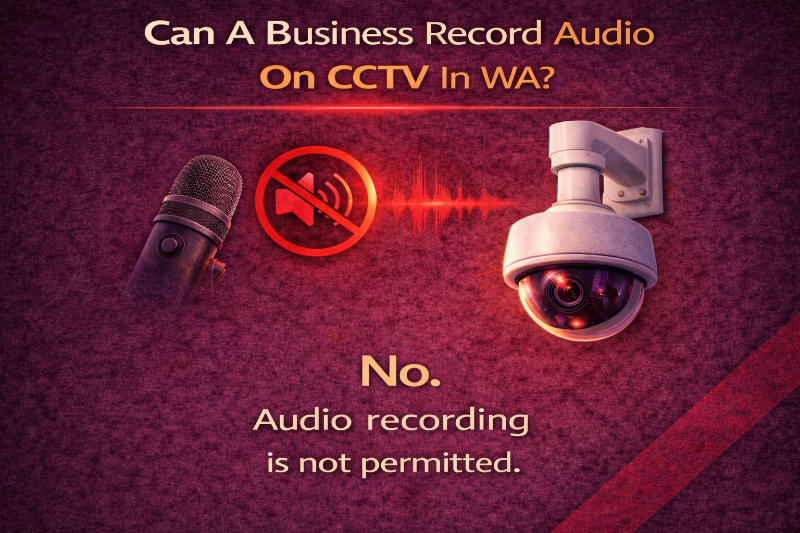
This is the biggest compliance trap.
In WA, audio recording often falls under “listening device” rules. CCTV cameras that record audio are treated more strictly than video-only cameras, because recording private conversations without consent can be an offence.
Practical guidance for businesses:
Unlawful audio surveillance can lead to serious consequences such as fines, legal action, or reputational damage.
business security systems
A helpful way to think about CCTV placement is “expectation of privacy”.
Businesses can use CCTV for legitimate reasons such as safety, theft prevention, protecting property, and investigating security incidents. The key is not to use workplace surveillance in a way that is excessive, secretive, or unfair.
Good practice looks like this:
If you keep records of monitoring such as CCTV video, the Australian Privacy Principles may apply depending on your situation.
This is the concept that often decides whether surveillance crosses the line.
People generally have a reasonable expectation of privacy in:
People generally have a lower expectation of privacy in:
This is why transparency matters. If you place cameras “in such a way” that they capture more than you need, such as filming into neighbouring properties or into staff-only private spaces, you increase legal risk.
Usually, you do not need individual written consent to record video in a shop’s public area if surveillance is clearly disclosed, used for a legitimate purpose, and handled properly. In many cases, visible signage supports implied consent in public-facing areas.
Where consent becomes more complicated is audio recording, recording in private spaces, or filming in a way that captures private activities.
This depends on whether your business is covered by the Privacy Act. Some small businesses may be exempt, but many are covered due to their activities, contracts, or the way they handle personal information.
Even where the Privacy Act does not apply, privacy laws and local laws still matter, and good CCTV governance is still the safest approach:
This reduces the chance of a security breach involving stored video.
CCTV compliance is not just camera placement. It is also what happens after recording.
A practical baseline for businesses:
If your CCTV connects to other electronic systems, treat it as part of your wider security technology stack and keep firmware updated.
In many situations, businesses can share relevant CCTV footage with police when it relates to break ins, theft, or serious security incidents. Keep the process controlled:
If police request footage under a warrant or formal process, follow that direction and keep internal records.
Covert surveillance is high-risk. In general, covert use of surveillance devices is more likely to be unlawful unless specific legal thresholds are met, such as a warrant in relevant circumstances.
If you are considering covert CCTV for suspected internal theft, get proper advice and consider alternatives such as access control audit trails and controlled investigations.
Yes, businesses can generally install CCTV in public-facing and operational areas if they comply with local laws and do not intrude into private spaces or record audio unlawfully.
Signs are strongly recommended to support transparency and implied consent in public areas, reduce disputes, and demonstrate legal compliance.
Audio surveillance is regulated more strictly. Recording private conversations without consent can be an offence, so most businesses should avoid audio recording unless they have a clear lawful basis and appropriate consent.
Workplace surveillance can be lawful when it has a legitimate business purpose and employees are informed. Businesses should document a clear policy and avoid monitoring in private spaces.
Businesses commonly provide relevant CCTV footage to police for investigations. Keep records of what you shared, why, and when, and follow any formal requests or warrant processes.
WA regulations for business security systems are manageable when you follow a few consistent rules: be transparent, avoid private spaces, treat audio surveillance as a special high-risk category, secure your CCTV footage, and inform employees about workplace surveillance. Done properly, CCTV supports safety, theft prevention, and incident response without creating unnecessary privacy risk.
If you want a compliant CCTV installation in Perth, Castle Security can review your entry points, public spaces, staff-only areas, and recording settings, then recommend camera placement, signage, retention, and system configuration that balances security and privacy. Contact Castle Security to book a CCTV compliance and design review.